

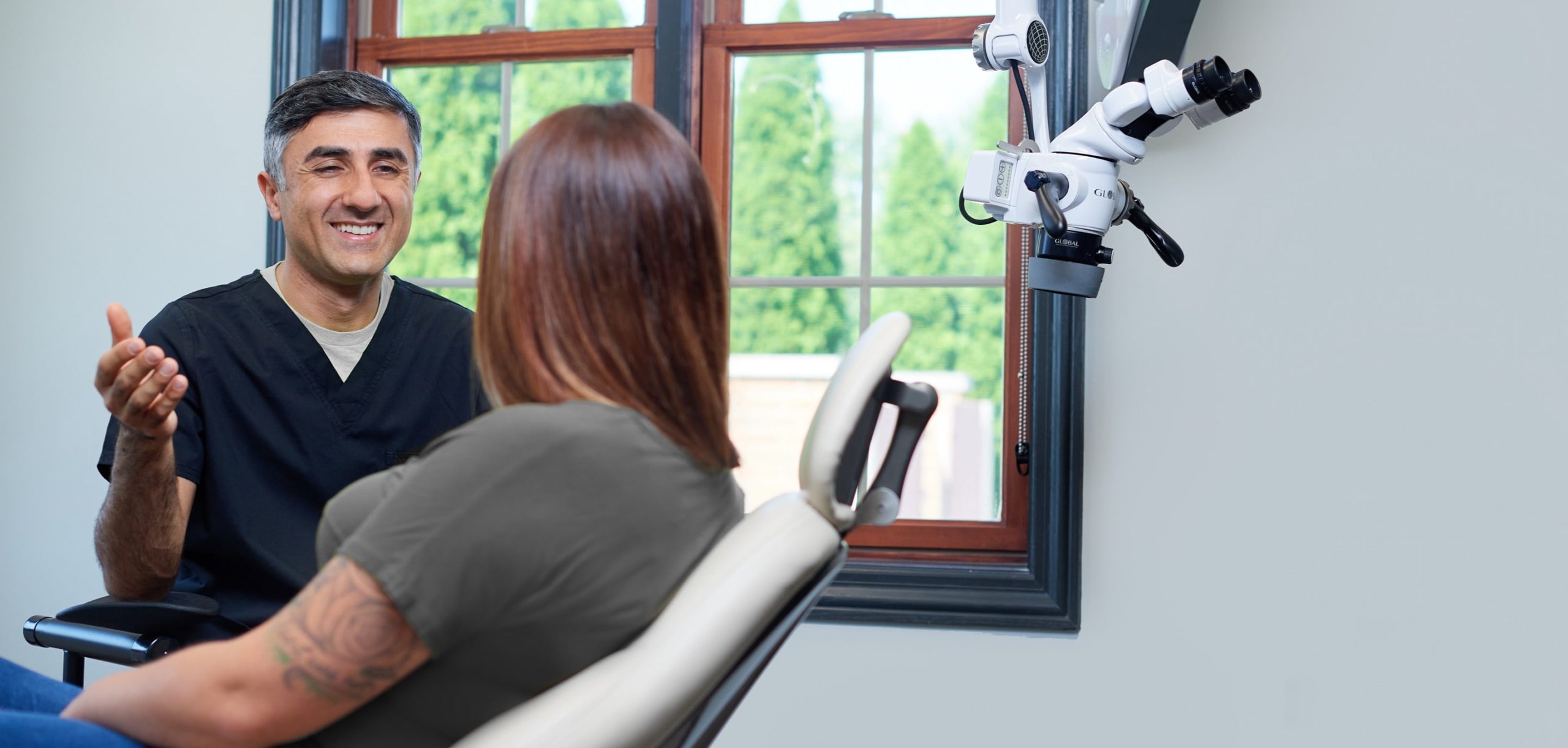


A previously treated tooth can still develop problems, and when it does, root canal retreatment offers a reliable path to saving it.
At Renovo Endodontic Studio, our specialists use advanced imaging, precision instruments, and proven techniques to address what the first procedure could not resolve, giving your natural tooth the best possible second chance.

Why Root Canals Sometimes Need Retreatment
Root canal therapy has a high success rate, but no procedure is immune to complications. A tooth that healed well initially can still develop new issues months or even years after treatment, and understanding why helps set realistic expectations for what comes next.
Several clinical factors can cause a treated tooth to break down over time:
- Missed Canals: Complex or curved root anatomy that was not fully accessed during the original procedure
- New Infection: Bacteria that re-entered the canal system through a cracked, loose, or failing crown
- Delayed Restoration: A permanent crown that was not placed promptly after the initial treatment, leaving the tooth vulnerable to contamination
- Fractured Instruments: Separated files left inside the canal that interfered with complete cleaning and sealing
- Canal Blockages: Calcified or obstructed canals that prevented thorough disinfection the first time
If you are experiencing persistent tooth pain after a root canal or signs of re-infection, root canal retreatment may be the appropriate next step. A thorough evaluation with 3D imaging can identify exactly what is driving the problem before any treatment begins.
How Our Root Canal Retreatment Works
Root canal retreatment follows a careful, step-by-step process designed to address the underlying cause of failure rather than just the symptoms. Our specialists take the time to fully understand what went wrong before reopening the tooth.
Each stage is performed with precision instruments and advanced technology that most general dental offices do not have on-site.
Step 1: Accessing the Tooth
Your specialist numbs the area completely before any work begins. The existing crown or filling material is carefully removed to reopen the tooth, giving direct access to the canal system. This step is performed with precision to preserve as much healthy tooth structure as possible.
Step 2: Removing the Old Filling Material
Once access is established, the previous root filling material, typically gutta-percha, is carefully removed from the canals. Our specialists use operating microscopes during this step, providing magnification and illumination that allow them to see clearly inside the canal and work with a level of precision not possible with the naked eye.
Step 3: Cleaning and Disinfecting the Canals
With the old material cleared, each canal is thoroughly cleaned, shaped, and disinfected. This is often where root canal retreatment produces better outcomes than the original procedure, as previously hidden or untreated canals can now be located and addressed.
For patients who have also experienced dental trauma management needs alongside a failing tooth, our team coordinates care to treat both concerns together.