

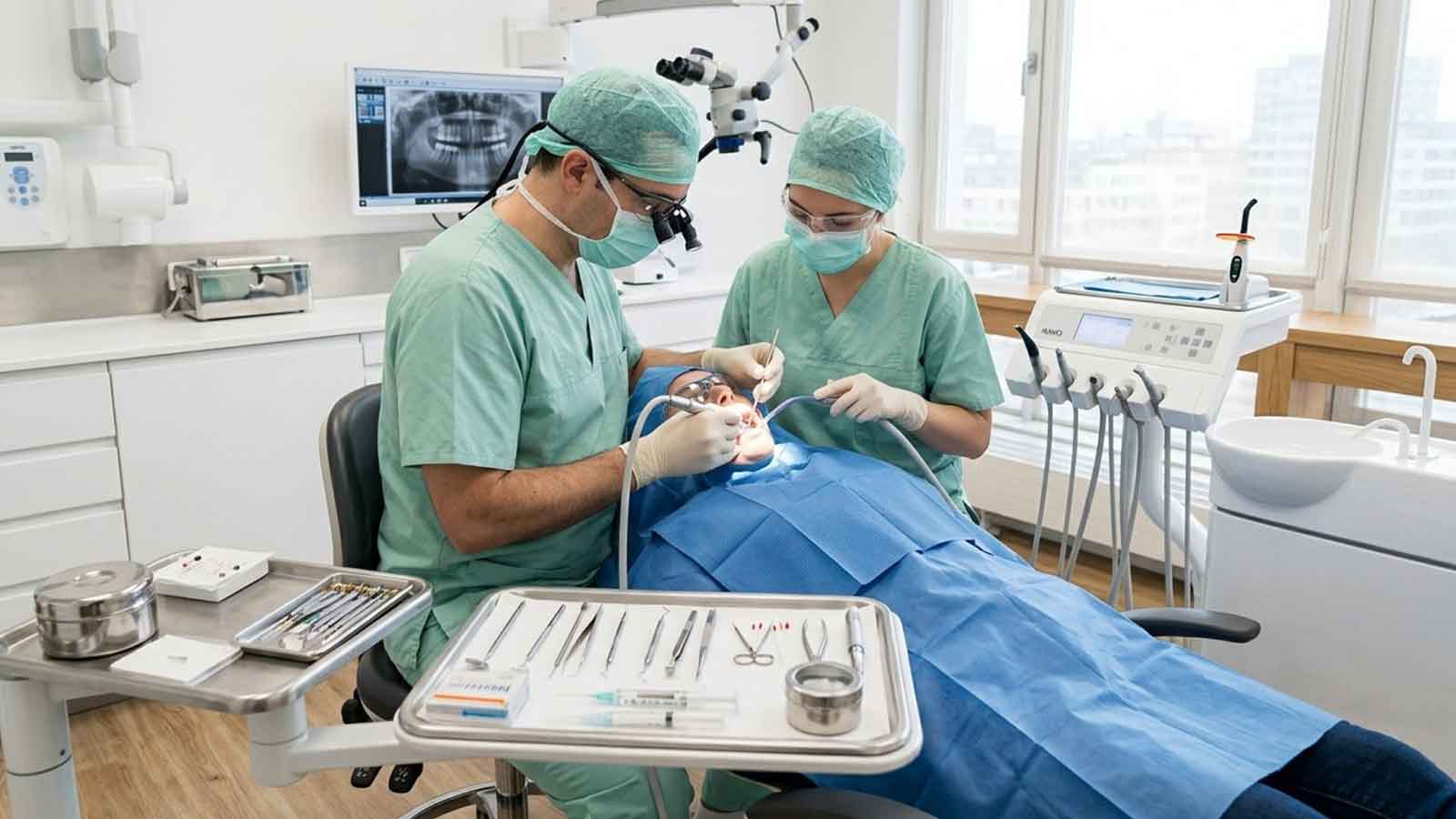
Persistent discomfort, swelling, or recurring infection after root canal treatment may indicate a condition at the root tip that non-surgical retreatment alone cannot resolve. Apicoectomy surgery near Chicago targets this area directly through a focused microsurgical procedure. At Renovo Endodontic Studio, our endodontists evaluate each case individually using detailed imaging to determine whether apicoectomy is the appropriate next step.
What Is an Apicoectomy?
An apicoectomy is a microsurgical procedure that removes the infected tip of a tooth root and the surrounding inflamed tissue when concerns remain after a root canal. The procedure allows an endodontist to address the affected area near the root end without removing the tooth.
Unlike a traditional root canal retreatment that accesses the tooth through the crown, an apicoectomy reaches the root tip through the gum tissue. After removing the affected tissue, your endodontist seals the root end with a biocompatible material to help prevent bacteria from entering the treated area.
Our endodontic team applies specialized training and microsurgical experience to evaluate complex cases and determine whether an apicoectomy procedure may be appropriate. Our patient’s guide to apicoectomy and our overview of understanding apicoectomy provide additional information about the treatment process.
When Is an Apicoectomy Necessary?
An apicoectomy may be recommended when a tooth continues to show signs of infection or inflammation after a root canal. Your endodontist reviews the condition of the tooth, the source of the concern, and how much healthy structure remains before recommending treatment.
A previously treated tooth may need further evaluation if you experience:
- Tenderness or discomfort when biting down
- A recurring dull ache near the gumline
- Swelling or a small bump on the gum near the treated tooth
- An area near the root that shows delayed healing on an X-ray
These symptoms may indicate inflammation around the root tip, also known as apical periodontitis. In some cases, an apicoectomy near Chicago may help address the affected area while allowing patients to keep their natural tooth.
Who May Be a Candidate for an Apicoectomy?
Not every tooth with lingering symptoms requires surgery. Your endodontist evaluates several factors to determine if an apicoectomy procedure may be a suitable option.
A patient may be a candidate when:
- Infection remains after root canal treatment: Symptoms continue or return, and imaging shows that the concern is located near the root tip. Our article on what to do when a root canal fails explains the available paths forward.
- Retreatment cannot reach the affected area: Complex canal anatomy, calcification, or existing dental work may prevent instruments from reaching the root end through the tooth.
- Enough healthy tooth structure remains: The tooth must have adequate support to function after treatment and healing.
- No fracture affects the outlook: A vertical root fracture can change the recommended treatment plan and may require a different approach.
Meeting these factors does not automatically mean surgery is required. During a consultation, your endodontist evaluates the tooth and recommends a treatment approach based on the clinical findings. Some cases call for combined non-surgical and surgical endodontic treatment, which the team discusses at that visit.
When Retreatment May Not Be Enough
Root canal retreatment may be an option when your endodontist can access and treat the inside of the canal system. Some canals, however, become difficult to work through because of calcification, complex anatomy, or previous treatment changes.
When the concern remains near the root tip and cannot be reached through the canal, an apicoectomy surgery near Chicago, IL allows your endodontist to access that area directly. This approach helps remove affected tissue and seal the root end without removing the tooth.
When an Apicoectomy May Not Be Recommended
An apicoectomy is not the right choice for every tooth. Factors such as a vertical root fracture, significant loss of tooth structure, or limited long-term support may affect whether surgery is appropriate. A cracked tooth evaluation helps determine how a fracture affects the outlook.
In these cases, the team discusses other options, including retreatment or extraction with a tooth replacement plan. Renovo Endodontic Studio focuses on recommending care based on each patient’s dental needs and the long-term condition of the tooth.
Retreatment, Apicoectomy, and Extraction Compared
Understanding the differences between retreatment, apicoectomy, and extraction can help you discuss the most appropriate option with your endodontic specialist.
| Approach | Best suited for | Access point |
| Retreatment | Infection that can be reached through the existing root canal system | Through the crown of the tooth |
| Apicoectomy procedure | Persistent infection near the root tip when retreatment is not practical or has not resolved the issue | Through the gum near the root tip |
| Extraction | Severe root damage or insufficient tooth structure for long-term function | Removal of the tooth |
Patients weighing retreatment against surgery often ask about durability, and our article on how long a retreated root canal lasts addresses that question directly.
What Happens During an Apicoectomy near Chicago?
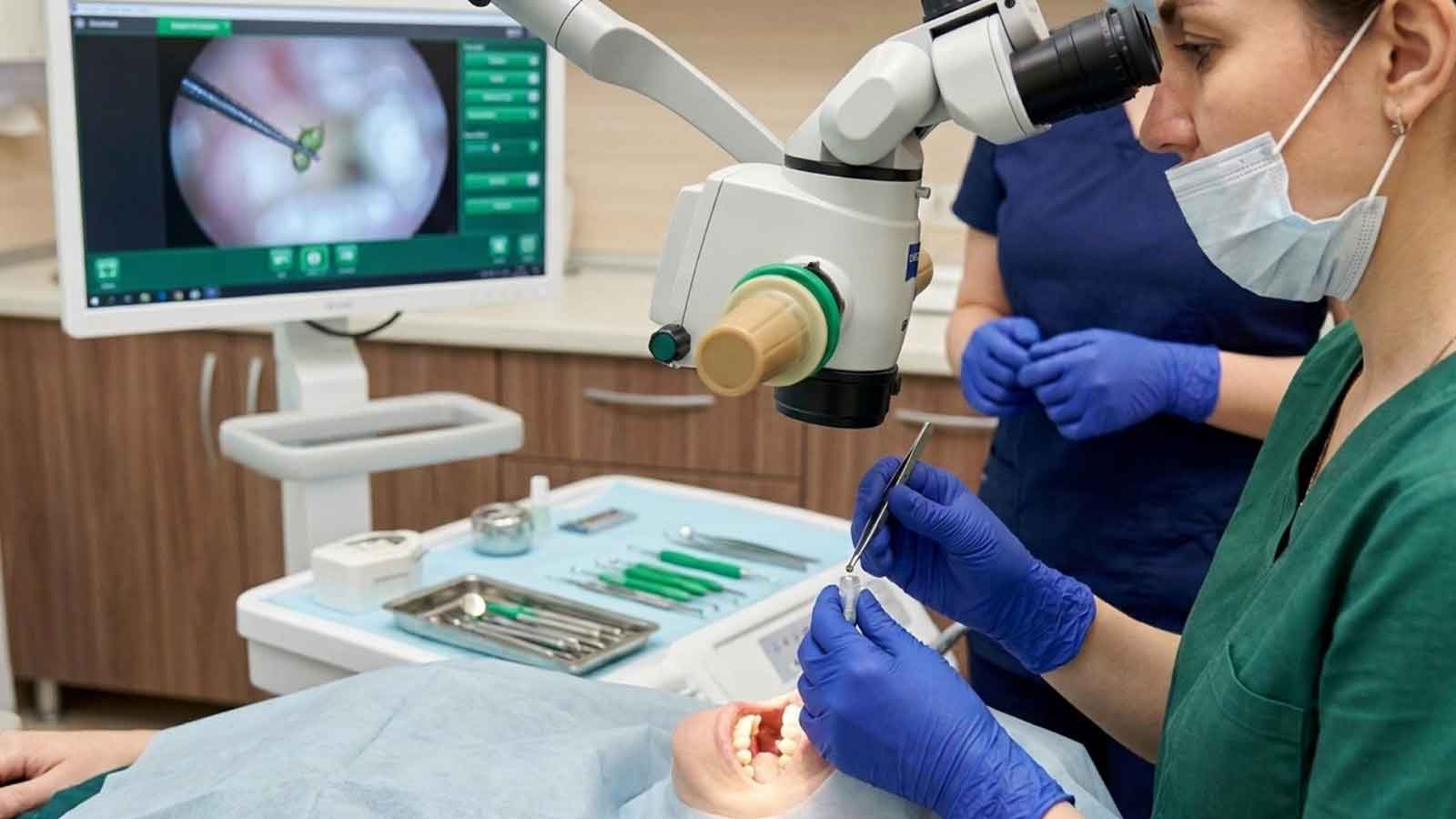
An apicoectomy follows a carefully planned process that treats the area near the root tip while preserving the remaining tooth structure. Diagnostic imaging completed beforehand guides each stage of the procedure.
The procedure typically includes these steps:
- Evaluate the tooth: Your endodontist reviews your dental history, symptoms, and imaging. When appropriate, cone beam computed tomography (CBCT) provides a detailed view of the root tip, surrounding bone, and nearby anatomy.
- Numb the treatment area: Your endodontist uses local anesthesia to numb the tooth and surrounding gum tissue to support your comfort during the procedure.
- Access the root tip: A small opening in the gum tissue exposes the affected area near the end of the root.
- Remove affected tissue and treat the root end: Using microsurgical techniques and magnification, your endodontist removes inflamed tissue and addresses the tip of the root.
- Seal the root end: Your endodontist seals the root end with a biocompatible material to help prevent bacteria from entering the treated area.
- Close the surgical site: Your endodontist repositions and secures the gum tissue with sutures. Before you leave, our team provides aftercare instructions to support the healing process.
Advanced imaging and magnification help the team evaluate complex details during treatment. A surgical operating microscope brings areas into view that remain hidden without enhanced visualization, including complex root anatomy or areas that require careful attention. These tools support the precision required for microsurgical treatment at the root tip.
Why Choose Renovo Endodontic Studio for Apicoectomy Surgery near Chicago?
Patients who need care beyond a standard root canal benefit from working with a practice focused on advanced endodontic treatment. At Renovo Endodontic Studio, specialized training, modern technology, and patient-focused care come together for complex cases.
Key reasons patients choose Renovo Endodontic Studio include:
- Specialized Endodontic Expertise: Our endodontists complete additional training after dental school focused on diagnosing and treating conditions involving the inside of the tooth and surrounding root tissues. Their experience with microsurgical procedures supports focused knowledge and precision in complex cases.
- Precision Diagnostics and Microsurgical Tools: Our locations use CBCT 3D imaging to evaluate root anatomy and surrounding bone, and our endodontists perform apicoectomy under operating microscope magnification.
- Sedation Options for Comfort: Dental anxiety is common, especially when patients need additional treatment after a previous root canal. Renovo Endodontic Studio offers sedation options, including nitrous oxide, oral conscious sedation, and general anesthesia with a visiting dental anesthesiologist when appropriate.
- Communication With Referring Dentists: Renovo Endodontic Studio works closely with referring dentists to support coordinated care. The team shares treatment findings, imaging, and recommendations so patients and their dental teams can make informed decisions throughout treatment.
- Convenient Care for Chicago Patients: Renovo Endodontic Studio serves Chicago patients from our locations in Schaumburg, Downers Grove, Elgin, and Rockford, with flexible scheduling and availability for urgent cases.
What Should I Expect After an Apicoectomy?
After an apicoectomy, your body needs time to heal around the treated area. Understanding the recovery process can help you follow your care instructions, recognize normal healing changes, and know when to contact Renovo Endodontic Studio with questions.
The First Few Days
Mild swelling, tenderness, or minor bruising around the surgical site may occur during the first few days after treatment. These symptoms typically improve as the area begins to heal. Following your post-operative care instructions can support proper healing and help you recover comfortably.
Healing Around the Root Tip
Healing around the root tip takes longer than the initial recovery period. Over the following months, your endodontist evaluates progress through follow-up visits, symptoms, and imaging that shows how the surrounding bone is healing.
A reduction in discomfort does not always confirm that the area has fully healed, which is why follow-up care remains an important part of the process. Your endodontist continues to monitor the treated tooth and review healing progress over time. Our detailed guide on apicoectomy healing and recovery provides more information about the recovery timeline.
Start Your Apicoectomy Evaluation near Chicago
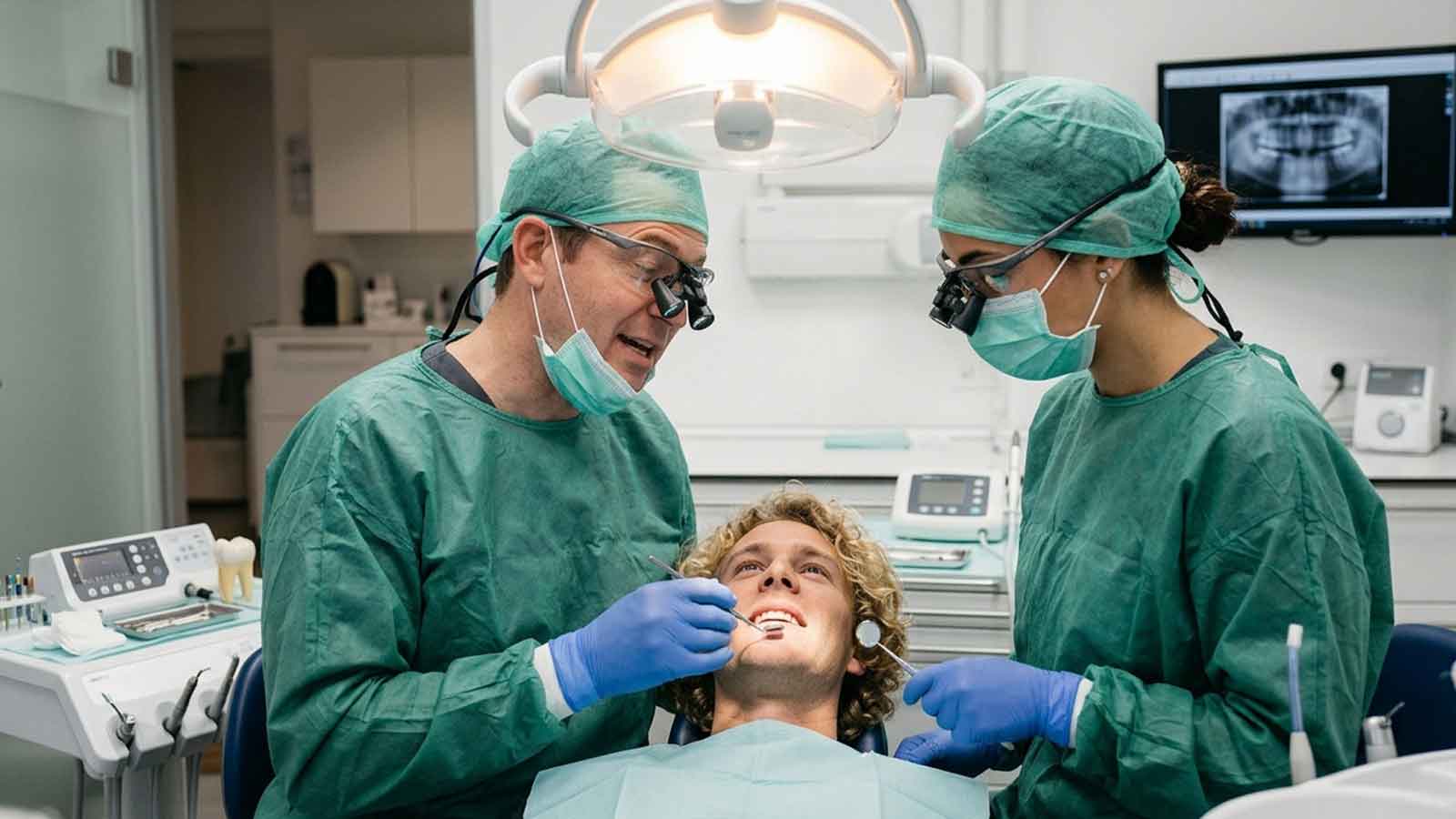
Persistent discomfort after a root canal may require evaluation from an endodontic specialist. A consultation helps identify the source of the concern and determine whether an apicoectomy near Chicago, retreatment, or another option may be appropriate.
Renovo Endodontic Studio serves Chicago patients and nearby communities from offices in Schaumburg, Downers Grove, Elgin, and Rockford. We work with referring dentists who need support with complex cases that require additional evaluation. Contact our team or request an appointment online to schedule a consultation. Your endodontist will review your tooth, explain the findings, and discuss the next steps for your care.
Frequently Asked Questions about Apicoectomy for Chicago Patients
How long does an apicoectomy take near Chicago?
Most apicoectomy procedures at Renovo Endodontic Studio take about 60 to 90 minutes and are completed during a single visit. The exact timing depends on factors such as the location of the tooth, root anatomy, and the complexity of the case. During your consultation, your endodontist reviews your imaging and explains what to expect during treatment.
Will I need a new crown after an apicoectomy near Chicago?
No. An apicoectomy treats the root tip through a small opening in the gum tissue, so it does not typically affect the crown or filling on top of the tooth. If your existing restoration has damage or decay, Renovo Endodontic Studio may coordinate with your general dentist to determine the appropriate next step.
How much does an apicoectomy cost near Chicago?
The cost of an apicoectomy varies based on the tooth being treated, the complexity of the case, and any additional services such as imaging or sedation. After your consultation, Renovo Endodontic Studio provides a treatment estimate based on your specific needs. Our team reviews expected costs and available payment options before treatment begins.
Does insurance cover an apicoectomy near Chicago?
Many dental insurance plans provide coverage for apicoectomy procedures, but benefits vary by plan. Our team reviews your insurance information, explains your expected coverage, and helps you understand any remaining costs. Visit our insurance and financial information page for more details about coverage and payment options.
Can an apicoectomy be performed twice on the same tooth near Chicago?
Yes, a second apicoectomy may be considered in select cases, but the decision depends on the condition of the tooth, surrounding bone, and the cause of the previous treatment concern. Your endodontist evaluates the tooth carefully and discusses whether additional surgery or another option may provide the best outcome.
What should I eat after an apicoectomy near Chicago?
After an apicoectomy, choose soft foods and avoid chewing near the treated area during the first few days. Foods such as yogurt, eggs, soft pasta, and smoothies eaten without a straw can be good options during early healing. Follow Renovo Endodontic Studio’s post-operative instructions and gradually return to your regular diet as the area becomes more comfortable.


