

Are Dental Implants Covered by Insurance? What Your Plan May (and May Not) Pay For

Most dental insurance plans do not cover the full cost of dental implants. Some plans exclude the titanium implant post but may provide coverage for related procedures. This means coverage can vary between patients, even with similar treatment plans.
Renovo Endodontic Studio accepts most PPO dental insurance plans. Patients who are still deciding on treatment can review the signs you might need dental implants before checking their benefits.
Table of Contents
- How Do Insurers Classify Implant Treatment?
- The Post, Abutment, and Crown
- Restorative Need vs. Cosmetic Preference
- What May Your Plan Pay For?
- Consultations and Diagnostic Imaging
- Extraction of the Damaged Tooth
- Bone Grafting and Site Preparation
- The Final Crown
- What May Your Plan Not Pay For?
- The Implant Post
- Original Medicare
- Basic and Low-Tier Dental Plans
- Plan Rules That Limit Your Coverage
- Waiting Periods on Major Services
- Annual Maximums
- Missing Tooth Clauses and Frequency Limits
- How Can You Confirm Your Coverage?
- Review Your Benefits Summary
- Confirm Coverage by Procedure Code
- Request a Pre-Treatment Estimate
- How Can You Manage Remaining Costs?
- HSA and FSA Funds
- Timing Treatment Across Benefit Years
- Understand Your Implant Costs Before Treatment Begins

How Do Insurers Classify Implant Treatment?
Your insurance carrier does not always treat dental implants as one single procedure. Instead, it reviews each part separately and applies different coverage rules based on your plan. A policy may cover one stage of treatment and exclude another.
The Post, Abutment, and Crown
Dental implants include three main components, and insurance plans may handle each one differently:
- Implant Post: A titanium fixture placed in the jawbone to act as an artificial tooth root.
- Abutment: A connector that attaches the implant post to the crown.
- Crown: The visible tooth replacement used for chewing and appearance.
Asking if your plan covers dental implants may lead to a general answer. Asking about each component by name can give you a clearer understanding of your benefits, since types of dental implants can affect how each stage is coded.
Restorative Need vs. Cosmetic Preference
Insurance coverage often depends on why you need the treatment. Tooth loss caused by decay, fracture, or infection may receive different consideration than treatment requested only for cosmetic reasons.
Your insurance review may consider:
- Diagnostic Imaging: Images that show tooth damage, bone loss, or treatment needs.
- Clinical Notes: Records explaining why the natural tooth could not be preserved.
- Treatment History: Documentation of previous attempts to save the tooth.
When treatment records demonstrate that the natural tooth could not be preserved despite prior intervention, such as root canal treatment, insurers may view the implant as a restorative necessity rather than a cosmetic preference. That documentation shows why preserving a natural tooth comes first in endodontic care.
What May Your Plan Pay For?

A dental implant coverage denial does not always mean your insurance will pay nothing. Some plans may cover related services, even if they exclude the implant post itself.
Related procedures may have different benefits depending on your policy.
Consultations and Diagnostic Imaging
Dental exams and 3D imaging may fall under diagnostic benefits, depending on your plan. Coverage can vary based on frequency limits and previous imaging completed within your insurance period.
Extraction of the Damaged Tooth
If a tooth cannot be preserved, extraction is usually billed separately from dental implant treatment. Your plan may review extraction benefits independently from implant-related exclusions.
Patients weighing a root canal against extraction should confirm how each procedure is coded before treatment begins.
Bone Grafting and Site Preparation
Some insurance plans may provide coverage for bone grafting when it meets specific clinical requirements. Other plans may consider it part of implant preparation and exclude coverage.
Bone grafting helps create a stable foundation when there is not enough bone volume to support an implant.
The Final Crown
The crown placed on top of a dental implant may have different coverage rules than the implant post. Some plans include implant-supported crowns under restorative benefits, but reimbursement amounts vary by policy.
Understanding how long dental implants last can help you weigh the coverage you receive against the lifespan of the restoration.
What May Your Plan Not Pay For?
Some insurance plans exclude certain parts of dental implant treatment or limit how much they contribute. Understanding these restrictions can help you prepare for potential out-of-pocket costs.
The Implant Post
The implant post is one of the most commonly excluded parts of dental implant treatment. Some insurance policies classify it as elective or cosmetic and do not provide coverage.
Review your plan’s exclusions and limitations section carefully. Implant-related exclusions may not appear in the general covered services summary.
Original Medicare
Medicare Parts A and B do not cover routine dental care or dental implants. Some Medicare Advantage plans may offer additional dental benefits, but coverage varies by plan.
In limited cases, Medicare may cover dental treatment that is medically necessary as part of a covered medical procedure, such as jaw reconstruction. Check with your insurance provider to understand the benefits available under your specific plan.
Renovo Endodontic Studio offers a 20% discount for Medicare patients.
Basic and Low-Tier Dental Plans
Basic dental plans often focus on preventive services, such as cleanings, exams, and fillings. Many do not include benefits for dental implants.
Changing plans may not provide immediate coverage. New policies with implant benefits may include waiting periods before major services become available.
Plan Rules That Limit Your Coverage
A plan may include dental implants in its benefits and still provide limited reimbursement. Several policy rules can affect how much you receive.
Waiting Periods on Major Services
Major service benefits commonly activate 6 to 12 months after enrollment.
If you need treatment for an infected or damaged tooth, delaying care may allow the condition to worsen. Discuss your options with your dental provider before waiting solely for insurance benefits.
Annual Maximums
Many dental plans limit the total amount they pay each year. Since dental implant treatment may involve multiple stages, your benefits may only cover part of the overall cost.
Some patients plan treatment across two benefit years to use more than one annual maximum. Your dental provider can help determine the right timing based on your oral health needs.
Missing Tooth Clauses and Frequency Limits
Some policies include missing tooth clauses (policy provisions that exclude coverage for replacing teeth lost before your plan started). Others limit how often a plan will pay for treatment in the same area.
Reviewing these details before treatment can help you understand your expected coverage.
How Can You Confirm Your Coverage?
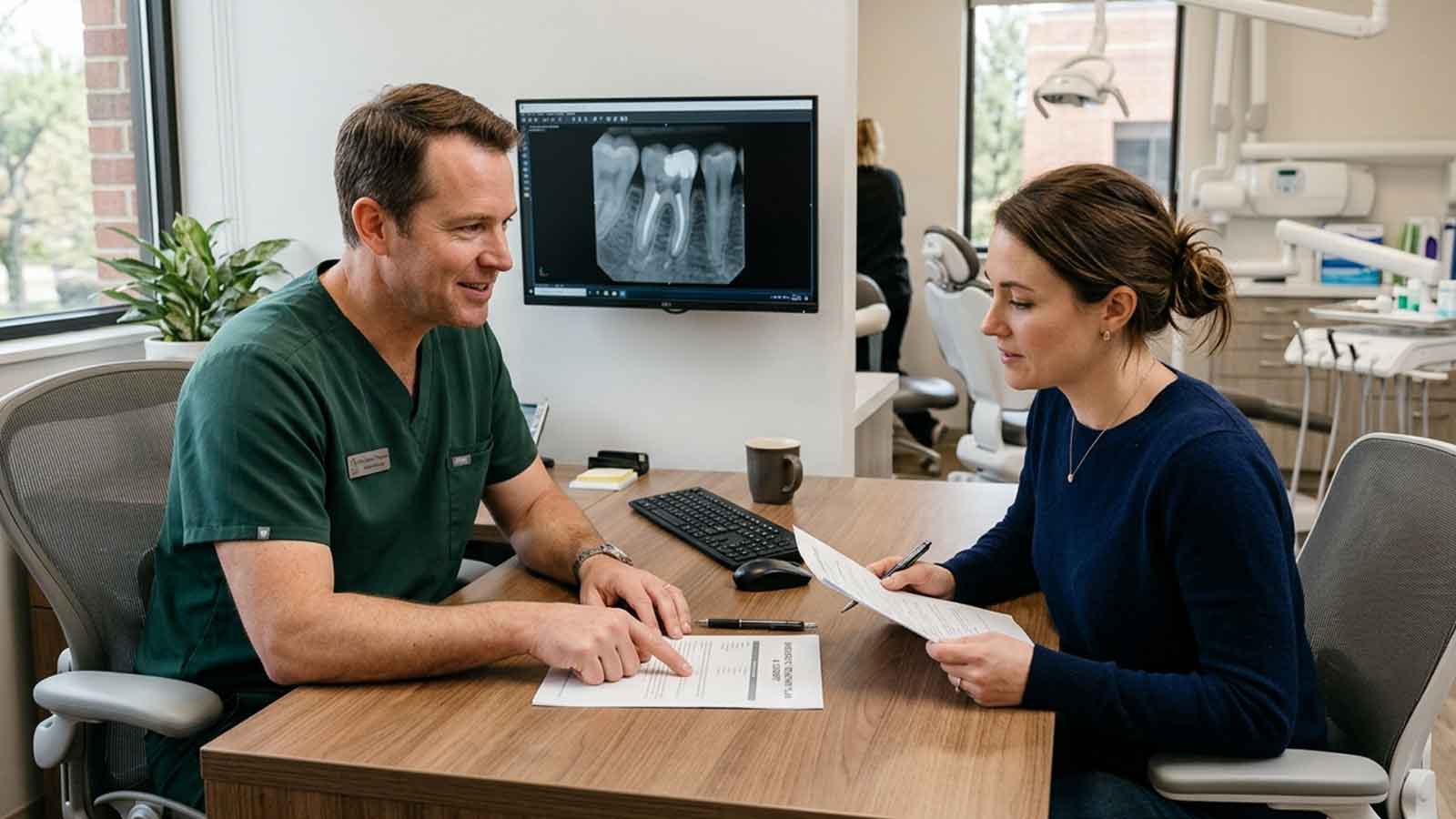
Taking a few steps before treatment can help you get a clearer picture of your insurance benefits.
Review Your Benefits Summary
Check these details in your plan documents:
- Annual Maximum: The total amount your plan pays each year.
- Major Services Percentage: The portion your plan may cover for certain procedures.
- Waiting Period: The time before major benefits become available.
- Exclusions List: Services your plan does not cover.
Confirm Coverage by Procedure Code
Insurance providers can give more accurate answers when you ask about specific procedure codes. Review each part of your treatment plan, including the implant post, abutment, crown, extraction, and bone grafting.
Request a Pre-Treatment Estimate
Predetermination means your insurer reviews the proposed treatment in advance and returns a written estimate of its share. This provides a clearer estimate of your expected costs.
The estimate is not a payment approval, and final reimbursement depends on your benefits at the time of service. Renovo Endodontic Studio submits claims directly to your insurance provider, so you do not need to file the paperwork yourself.
How Can You Manage Remaining Costs?
Once you know your plan’s share, the remaining cost can be addressed through financing, tax-advantaged accounts, or strategic treatment timing. Patients concerned about the cost of dental implants often find that the solution lies in how the remaining balance is financed rather than in the treatment fee itself.
HSA and FSA Funds
Health savings accounts (HSA) and flexible spending accounts (FSA) may be used for eligible dental expenses, allowing you to use pre-tax funds toward treatment costs. FSA funds may have expiration rules, while HSA balances typically carry over.
Renovo Endodontic Studio offers third-party financing through Cherry and CareCredit, with low or no-interest options available. Our team can walk you through payment options alongside your benefits.
Timing Treatment Across Benefit Years
Some patients schedule different stages of treatment across two benefit years to use available annual maximums. Your treatment timeline should always follow your dental needs and healing requirements.
Renovo Endodontic Studio can review your options and help you understand the costs involved before you move forward with treatment.
Understand Your Implant Costs Before Treatment Begins
Renovo Endodontic Studio can review your benefits and provide a clear estimate of your expected costs before treatment begins. A benefit check can show what your plan may cover, what it excludes, and what you may need to pay.
Our team explains your implant options, including how dental implants compare to natural teeth.
Schedule an appointment with our team to review your coverage and discuss a treatment plan based on your benefits.


