

Apicoectomy vs. Extraction: How to Decide Which Is Right for You
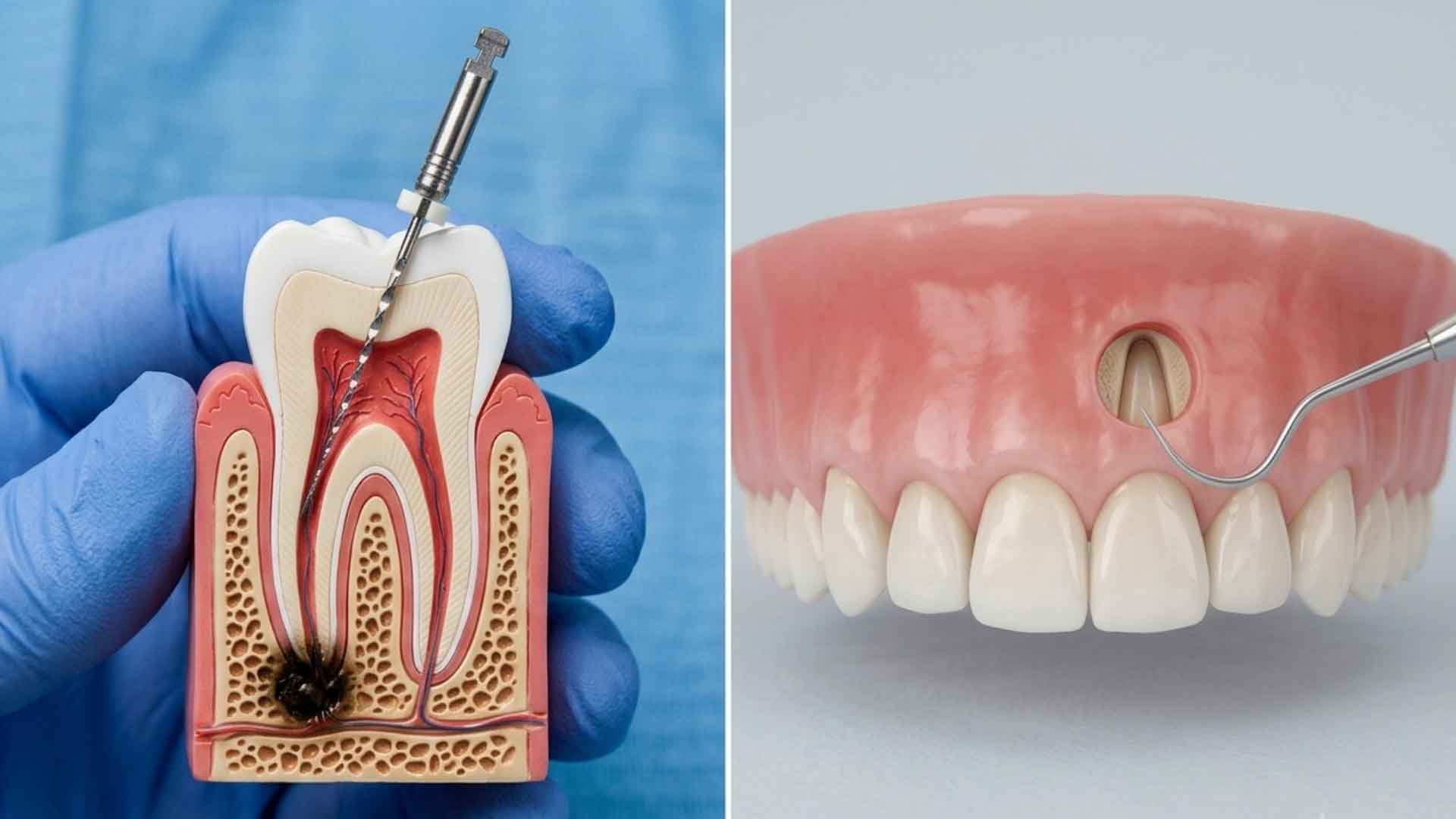
When a root canal does not heal as expected, you may need to choose between an apicoectomy and a tooth extraction. An apicoectomy is a microsurgery in which the endodontist removes the tip of the tooth root and surrounding infected tissue to preserve the natural tooth. An extraction removes the entire tooth when saving it is no longer a reliable option.
At Renovo Endodontic Studio, our endodontists evaluate the tooth, root structure, surrounding bone, and extent of infection before recommending treatment. For a broader overview, our guide on understanding apicoectomy walks through how the procedure fits into modern endodontic care.
How Do Apicoectomy and Tooth Extraction Differ?
An apicoectomy targets infection at the root tip while keeping the natural tooth in place. A dental extraction removes the entire tooth when damage or decay makes preservation unreliable. Your endodontist recommends one path or the other based on how much healthy structure the tooth still has.
Table of Contents
- Understanding Apicoectomy Treatment
- How the Procedure Works
- Benefits of Preserving the Tooth
- Risks and Limitations of Apicoectomy
- What to Expect During Recovery
- Understanding Tooth Extraction
- Signs the Tooth Cannot Be Saved
- Risks and Limitations of Tooth Extraction
- How Does Your Endodontist Decide Which Option Is Right for You?
- Apicoectomy vs. Extraction: Key Factors to Compare
- Tooth Structure and Restorability
- Cost and Long-Term Value
- Long-Term Outlook for Your Bite
- Schedule Your Evaluation at Renovo Endodontic Studio
- Frequently Asked Questions
- Is an apicoectomy safer than pulling the tooth?
- How much does a tooth extraction cost compared to an apicoectomy?
- How long does a tooth last after an apicoectomy?
- Does dental insurance cover these procedures?
- How long should I wait to replace an extracted tooth?
- What are the signs I need urgent treatment?

Understanding Apicoectomy Treatment
An apicoectomy may be appropriate when a previous root canal has not fully resolved an infection, but the tooth still has enough healthy structure to preserve. Our endodontists at Renovo Endodontic Studio typically consider this procedure when the problem remains limited to the root tip. Our detailed breakdown of the apicoectomy procedure, risks, and healing tips and our patient’s guide to apicoectomy offer additional context.
How the Procedure Works
The endodontist makes a small opening in the gum to access the affected root. They remove the root tip and surrounding infected tissue, then seal the end of the root with a biocompatible material to help prevent bacteria from reentering.
A surgical microscope provides a magnified view of the treatment area. This added precision helps the endodontist identify and treat small areas that may be difficult to see during standard root canal treatment.
Benefits of Preserving the Tooth
Keeping your natural tooth offers several important benefits:
- Preserved bite: The tooth remains in its natural position, which supports normal chewing and alignment.
- Jawbone support: The root helps maintain stimulation in the surrounding jawbone.
- No replacement needed: Preserving the tooth may eliminate the need for an implant or bridge.
Risks and Limitations of Apicoectomy
An apicoectomy does not suit every situation, and the procedure carries limitations worth understanding before you decide.
- Not every tooth qualifies: A tooth needs enough healthy structure and adequate bone support for the surgery to succeed.
- Possible failure: In some cases, the infection persists or returns, and a tooth extraction may still become necessary afterward.
- Healing time: The gum and bone need several weeks to heal fully, which requires patience and careful aftercare.
What to Expect During Recovery
Most patients experience mild soreness or swelling for several days. Over-the-counter medication may help manage discomfort when appropriate and recommended by the provider. Following your post-operative care instructions closely supports smoother healing.
Many patients return to work and routine activities within a day or two. The gum and surrounding bone continue healing over the following weeks, and recovery times vary by patient.
Understanding Tooth Extraction

A tooth extraction may be appropriate when severe damage, decay, or a deep fracture makes preserving the tooth unlikely. Removing the tooth can eliminate the source of infection and allow the patient to plan for a suitable replacement.
Signs the Tooth Cannot Be Saved
An endodontist may recommend dental extraction when the tooth has:
- A vertical root fracture (a crack that runs lengthwise through the root): This type of break may extend below the gumline or into the bone, which can prevent the root from being repaired or sealed. Our cracked tooth repair options address certain cracks, though a full root fracture often cannot be saved.
- Severe decay: Extensive damage may leave too little healthy tooth structure to support a filling or crown.
- Structural instability: A significantly weakened tooth may no longer withstand normal biting and chewing forces.
Severe pain, swelling, dental trauma, or a badly broken tooth may require an urgent evaluation. Depending on the diagnosis, an emergency tooth extraction may be necessary to address the infection or damage.
Risks and Limitations of Tooth Extraction
Removing a tooth resolves the immediate problem, but it introduces trade-offs that shape your long-term plan.
- Permanent loss: Once removed, the natural tooth cannot be restored, and a replacement becomes the only way to fill the space.
- Bone loss: Without a tooth root to stimulate it, the jawbone in that area gradually loses volume.
- Shifting teeth: Adjacent teeth may drift toward the open space, which can affect your bite and alignment over time.
- Replacement cost: A dental implant, bridge, or partial denture adds expense and additional treatment steps.
A replacement plan can help maintain your bite, alignment, and oral function. Depending on your needs, your dental provider may recommend a dental implant, bridge, or partial denture.
How Does Your Endodontist Decide Which Option Is Right for You?
Your endodontist bases the recommendation on a careful clinical evaluation rather than a single symptom. Several factors guide the decision, and understanding them helps you take part in the conversation.
The evaluation typically includes:
- Imaging: Detailed 3D imaging reveals the root structure, infection spread, and surrounding bone in ways standard X-rays cannot.
- Tooth structure: The amount of healthy, restorable structure remaining determines whether preservation is realistic.
- Infection extent: The location and severity of the infection influence which treatment can resolve it.
- Bone condition: Adequate bone support is essential for an apicoectomy to succeed.
- Overall health: Certain medical conditions may affect healing and shape the recommendation.
Before an apicoectomy, your endodontist often considers endodontic retreatment first. Retreatment reopens and cleans the existing root canal, and it frequently resolves the infection without surgery. An apicoectomy typically becomes the next step when retreatment alone cannot clear the problem. When you meet with your specialist, ask which options apply to your tooth, what the success outlook looks like, and what happens if the first approach does not fully work.
Apicoectomy vs. Extraction: Key Factors to Compare
Several factors help determine which option offers the better fit for your situation.
Tooth Structure and Restorability
- Apicoectomy: Better suited to a tooth that remains stable with infection confined to the root tip.
- Tooth extraction: Often the necessary choice when little healthy structure remains to support the tooth.
Cost and Long-Term Value
- Apicoectomy: Preserves the natural tooth and may eliminate the need for a dental implant or bridge.
- Tooth extraction: May have a lower initial cost, but replacing the missing tooth can increase the total expense.
Comparing the complete treatment plan, rather than only the first procedure, provides a clearer picture of root canal versus extraction value.
Long-Term Outlook for Your Bite
- Apicoectomy: A preserved natural tooth tends to hold chewing function and alignment more reliably than a replacement.
- Tooth extraction: A well-planned replacement can restore function, though it may need periodic maintenance over the years.
If an apicoectomy does not resolve the infection, tooth extraction may still become necessary.
Schedule Your Evaluation at Renovo Endodontic Studio

A detailed evaluation by an endodontic specialist provides the clarity needed to make an informed decision. The specialists at Renovo Endodontic Studio use detailed 3D imaging to evaluate the tooth, identify the source of infection, and recommend whether preserving or removing it offers the more appropriate option.
When an urgent emergency dental extraction is necessary, the team responds promptly to address pain and protect your oral health. Schedule a consultation today to receive a clear treatment recommendation for your tooth.
Frequently Asked Questions
Is an apicoectomy safer than pulling the tooth?
Both procedures are generally safe when performed by a qualified specialist. The safer option depends on the specific tooth, since each procedure suits a different clinical situation. Your endodontist will recommend the approach that best fits the tooth’s condition and your long-term oral health.
How much does a tooth extraction cost compared to an apicoectomy?
A tooth extraction often costs less initially than an apicoectomy. However, replacing the missing tooth with an implant, bridge, or partial denture may increase the total cost. Your complete treatment plan provides the most accurate cost comparison.
How long does a tooth last after an apicoectomy?
With proper care, a tooth treated with an apicoectomy can last many years, and often for life. Long-term success depends on how well the infection was resolved, the tooth’s remaining structure, and consistent oral hygiene. Regular dental checkups help catch any concerns early.
Does dental insurance cover these procedures?
Many dental insurance plans provide some coverage for apicoectomies and tooth extractions, but benefits vary by plan. Renovo Endodontic Studio can review your insurance and payment information and explain estimated out-of-pocket costs before treatment.
How long should I wait to replace an extracted tooth?
The timing depends on healing, bone condition, and the type of replacement planned. Some patients may receive an implant immediately, while others need several weeks or months of healing. Your dental provider will recommend an appropriate timeline after evaluating the extraction site.
What are the signs I need urgent treatment?
Severe or worsening tooth pain, facial swelling, fever, drainage, or a broken tooth may require urgent treatment. Contact an endodontic specialist promptly, especially when swelling spreads or symptoms affect swallowing or breathing. An evaluation will determine whether you need an emergency dental extraction or another treatment.


