

How Microscope Technology Improves Endodontic Surgery Outcomes

Endodontic surgery asks a lot of a clinician’s eyes. The structures involved sit deep inside the tooth and the surrounding bone, often measuring less than a millimeter across. Working at that scale leaves too much to guesswork.
This is where the surgical microscope addresses this directly. Magnified, well-illuminated visibility allows a specialist to see canals, fractures, and tissue that would otherwise remain hidden, and that level of detail shapes the entire outcome of a procedure like microsurgery.
Table of Contents
- What is Microscope Technology in Dentistry?
- What Does a Surgical Microscope Add to Endodontic Treatment?
- Greater Confidence in Complex Cases
- Faster Healing With Less Tissue Damage
- Fewer Complications During and After Surgery
- How Microscopes Affect Endodontic Surgery Success Rates
- Renovo Endodontic Studio Utilizes this Technology
- FAQs
- How do dental operating microscopes affect the success rates of endodontic treatments?
- What are the uses of microscopes in endodontics?
- Why is a microscope important during surgery?
- What is the role of magnification in endodontics?
- Do all endodontists use a microscope?
- Is endodontic microsurgery painful?
- How long does it take to heal after endodontic surgery?

What is Microscope Technology in Dentistry?
A dental operating microscope is a high-powered optical system mounted above the treatment area. It combines strong vision with a focused light source, giving the clinician a clear, enlarged view of the tooth and its internal anatomy. The result is detail that simply isn’t available through standard loupes or unaided sight.
The technology brings together a few core features that make it valuable in the treatment room:
- Coaxial Illumination: Light travels along the same line as the clinician’s view, removing shadows inside deep, narrow spaces.
- Variable Magnification: Adjustable zoom lets the specialist move from a wide working view to fine detail in seconds.
- High-Definition Documentation: Built-in cameras capture images and video, so patients can see exactly what was found and treated.
Specialists rely on these same optics across many procedures, and you can read more about the role of the dental operating microscope in everyday endodontic care to understand its broader use. In surgery, those benefits become even more pronounced.
What Does a Surgical Microscope Add to Endodontic Treatment?
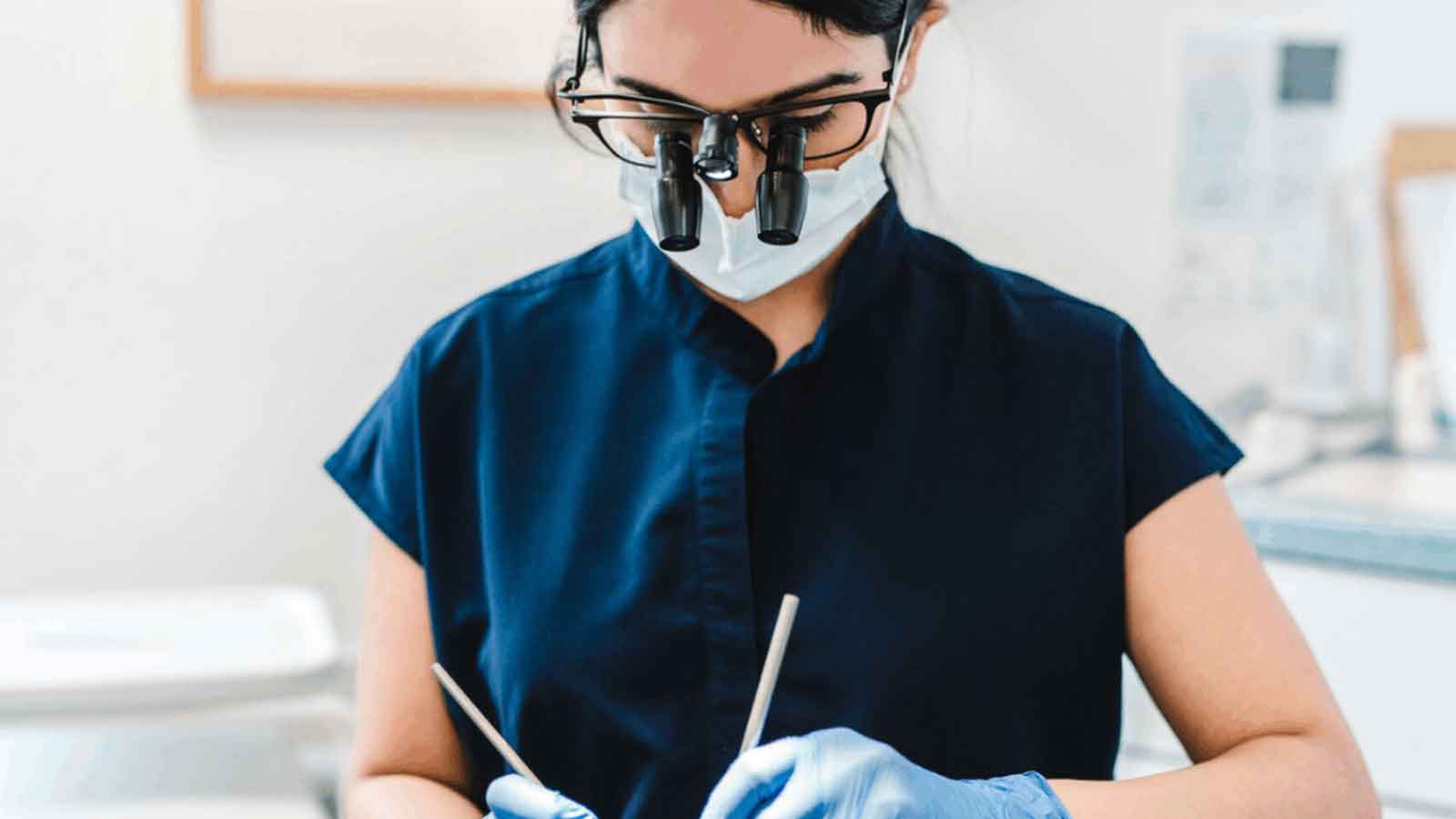
The features of a microscope only matter when you see what they change during a real procedure. In surgery, magnification and light translate into better outcomes at the moment that decides whether a tooth heals. The three benefits below show where that difference shows up most.
Greater Confidence in Complex Cases
Difficult surgeries often involve hidden canals, separated instruments, or perforations that are nearly impossible to manage by sight alone. With high-resolution visibility, the specialist can locate and address these problems directly, supporting the same tooth-saving goal as a thorough root canal treatment.
Faster Healing With Less Tissue Damage
Because the surgeon can clearly see the root tip, the opening made in the bone remains smaller and more precise. Less disruption to the surrounding gum and bone means the area knits back together faster and with fewer setbacks.
Fewer Complications During and After Surgery
Sharper vision lowers the risk of missing infected tissue or damaging healthy structures during the procedure. This reduces the risk of reinfection and the complications that lead to repeat treatment.
How Microscopes Affect Endodontic Surgery Success Rates
Research consistently links microscope-assisted surgery to higher success rates, and the reason comes down to precision. When a surgeon can see the root tip clearly, the steps that determine healing get done correctly the first time.
Magnified vision improves outcomes in several measurable ways:
- Smaller Osteotomies: A clearer view means the surgeon opens less bone to reach the root tip, preserving healthy structure.
- Precise Root Resection: Improved visibility allows for a shallower resection angle, exposing fewer dentinal tubules and reducing the risk of reinfection.
- Complete Canal Treatment: Hidden and accessory canals are located and sealed, closing off the pathways that cause failure.
- Confident Obstruction Removal: Separated instruments and blockages can be safely spotted and removed.
These advantages explain why microscope technology has become standard in modern surgical care, and our patient’s guide to apicoectomy walks through how this precision applies to a specific surgical procedure. Better visibility leads to cleaner work, and cleaner work leads to teeth that heal and last.
Renovo Endodontic Studio Utilizes this Technology

Our specialists use advanced microscopy technology throughout our surgical procedures as part of our patient-centered care, which defines our practice across our locations in Schaumburg, Elgin, Downers Grove, and Rockford.
Schedule a consultation with Renovo Endodontic Studio today to find out how this technology can support your treatment and protect your natural tooth.
FAQs
How do dental operating microscopes affect the success rates of endodontic treatments?
Microscopes improve success rates by providing the specialist with a clear, magnified view of the root canal system. This visibility helps locate every canal, completely remove infected tissue, and precisely seal the area. Each of those steps directly reduces the chance of treatment failure.
What are the uses of microscopes in endodontics?
Endodontists use microscopes to find hidden canals, identify cracks and fractures, remove broken instruments, and repair perforations. Combined magnification and shadow-free lighting make these delicate tasks far more reliable. They also support documentation, so patients can see what was done.
Why is a microscope important during surgery?
Surgical sites in endodontics are small, deep, and inherently poorly lit. A microscope provides both high visibility and shadow-free illumination to the area, allowing the surgeon to work with greater accuracy. That accuracy translates into less tissue damage and better healing.
What is the role of magnification in endodontics?
Magnification reveals anatomy that the eye cannot detect, such as accessory canals and micro-fractures. Seeing these details allows the specialist to treat the tooth completely rather than missing problem areas. Complete treatment is what protects the tooth long term.
Do all endodontists use a microscope?
Not every endodontist uses a microscope, though it has become the standard of care in modern practice. Specialists who use one offer a level of precision that cannot be matched. Our team relies on this technology for both surgical and non-surgical care.
Is endodontic microsurgery painful?
Endodontic microsurgery is performed under local anesthesia, so the procedure itself stays comfortable. Most patients report mild soreness afterward that responds well to standard pain relief. The minimally invasive nature of microscope-guided surgery often means less swelling and a quicker recovery.
How long does it take to heal after endodontic surgery?
Most patients return to normal activity within a day or two, with the gum tissue healing over the following weeks. Bone healing around the root tip continues for several months and is checked at follow-up visits. The precision of microscope-guided surgery supports smoother, more predictable healing.


